Crystal Meanings · 9 min read
Smoky Quartz Bracelet Meaning, Benefits & How to Wear It
Discover smoky quartz bracelet meaning, traditional benefits, five-element symbolism, how to wear it, spot real quartz, and care for your bracelet safely.
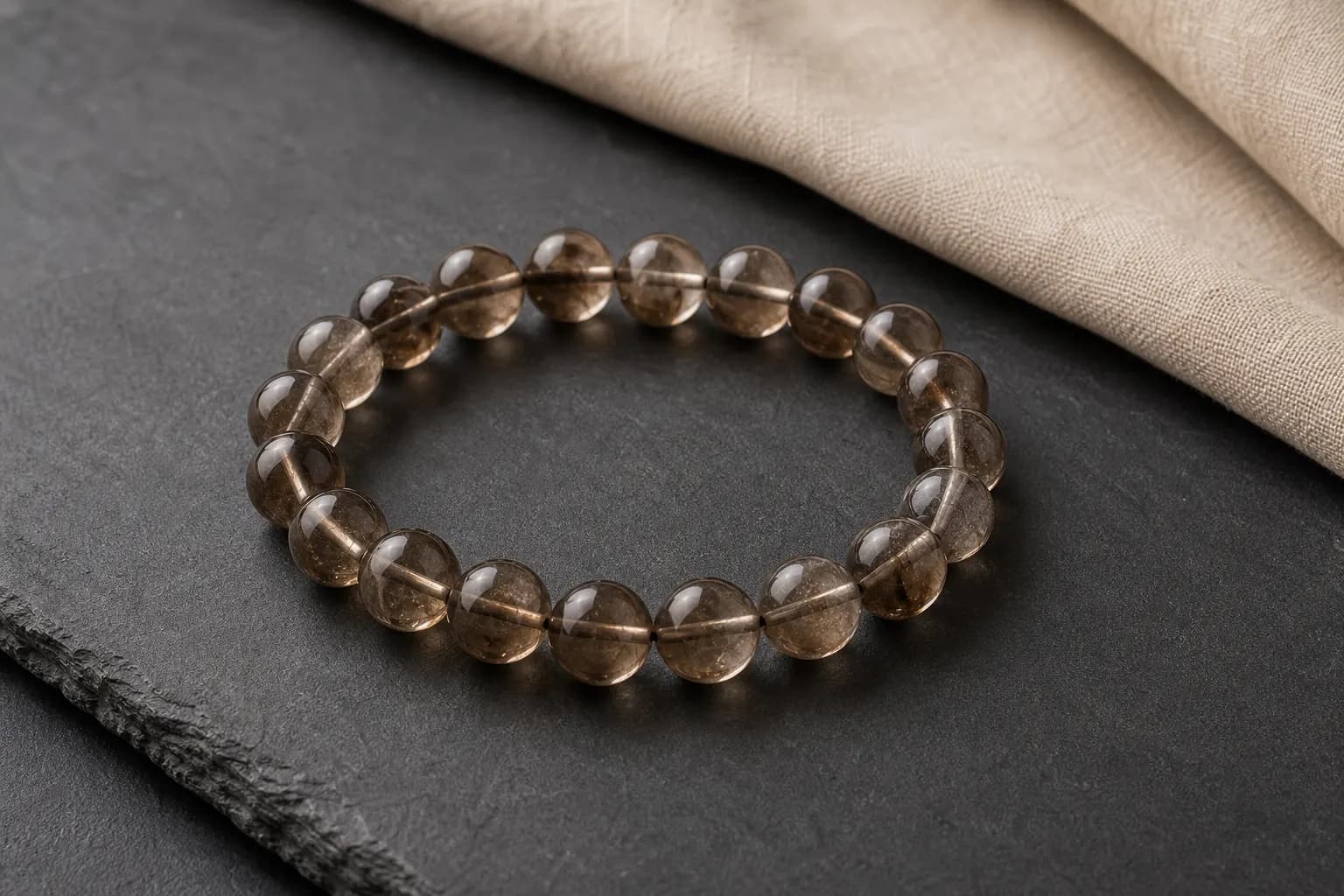
A smoky quartz bracelet is a strand of gray-to-brown quartz beads worn for its understated color and its traditional symbolism of grounding, steadiness, and release. The practical meaning is simple: it can be a wearable reminder to slow down, clear away distraction, and return to what matters. It is jewelry and a personal ritual object—not a medical treatment or a guarantee of protection, calm, or any other outcome.
This guide explains smoky quartz bracelet meaning, the benefits people traditionally associate with it, where it sits in the five-element system, how to wear it, how to judge the stone, and how to care for a bracelet you want to keep in daily rotation.
What does a smoky quartz bracelet mean?
A smoky quartz bracelet traditionally represents grounding, boundaries, and letting go. Its smoke-like color is often read as a visual metaphor: the stone appears to hold a cloud inside clear quartz, so modern crystal traditions connect it with moving through mental clutter and returning to solid ground.
Those associations are symbolic, not scientific effects. A bracelet cannot absorb stress or block harm in a measurable way. It can, however, work like any meaningful object: you choose an intention, notice the bracelet during the day, and use that moment to recall the habit or value you want to practice.
That grounded framing makes smoky quartz especially easy to wear. It does not need a dramatic ritual or a special occasion. The neutral brown, gray, and near-black tones suit workwear, weekend clothes, and mixed-stone designs, while the meaning stays personal to the wearer.
What smoky quartz actually is
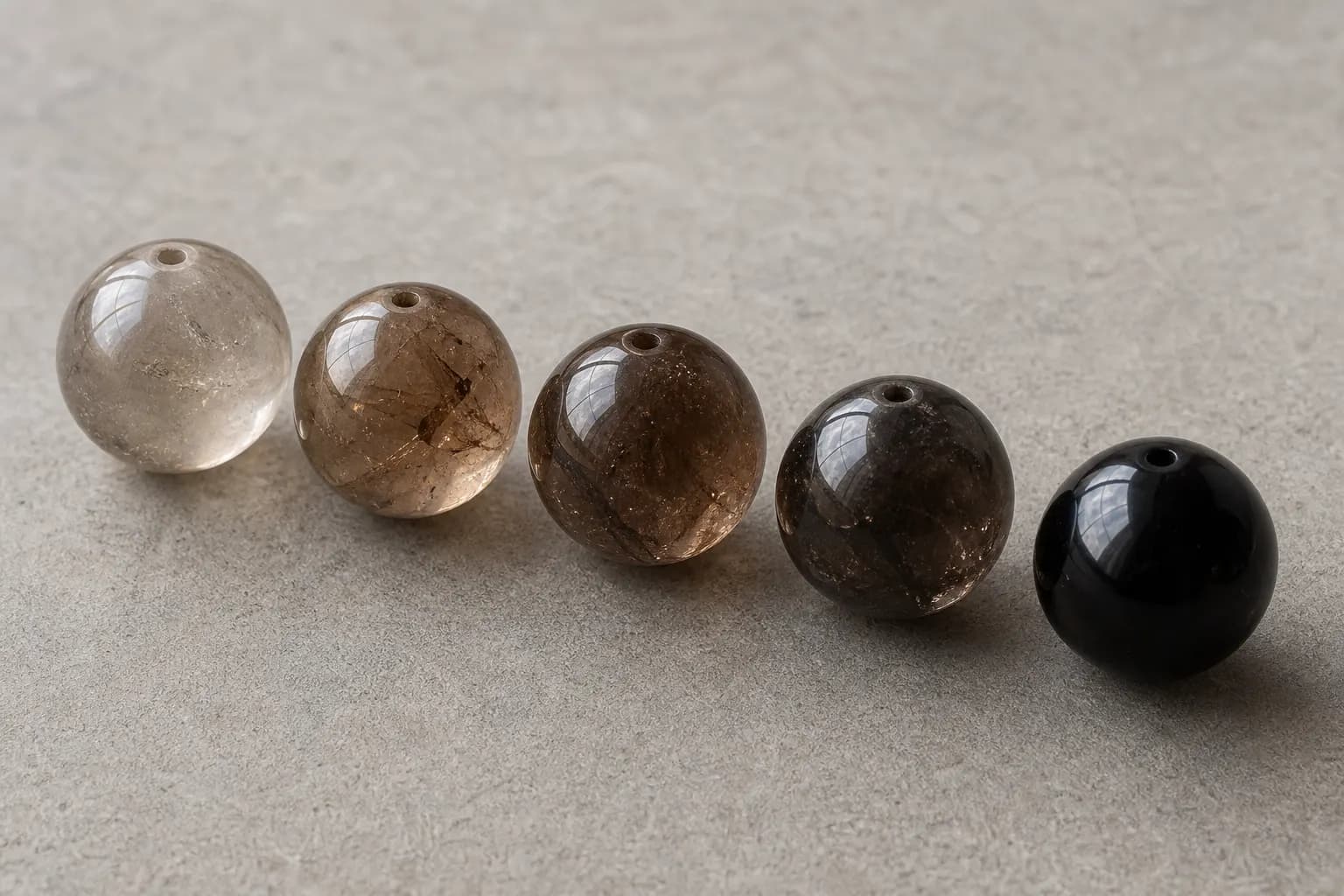
Smoky quartz is a color variety of quartz, the mineral silicon dioxide (SiO₂). Its color ranges from pale smoke gray and warm tea brown to very dark brown or nearly black. The darkest material is sometimes called morion. “Smoky topaz,” on the other hand, is an outdated and misleading trade name: smoky quartz is quartz, not topaz.
The color is not smoke trapped in the stone. Gemological research explains that trace aluminum can replace a small amount of silicon in the quartz structure; natural irradiation over geologic time then creates color centers that absorb visible light and produce the smoky appearance. Laboratory irradiation can create or deepen the same color, so color alone cannot prove whether a stone is untreated. The Gemological Institute of America’s research on color in gems explains the mechanism in more detail.
Quartz is widely used in jewelry because it takes a good polish and ranks 7 on the Mohs hardness scale. That makes smoky quartz reasonably durable for beads, although a bracelet can still chip from a hard impact and its elastic cord is usually more vulnerable than the stone. The Smithsonian’s smoky quartz specimen record also shows how transparent material can carry a distinct smoky tint.
Smoky quartz bracelet benefits: traditional and practical
When people describe smoky quartz bracelet benefits, they are usually talking about traditional associations and the experience of wearing an intentional object. The most common themes are:
- Grounding: a cue to pause, notice your surroundings, and take the next practical step.
- Boundaries: a symbol of deciding what deserves your attention and what does not.
- Release: a reminder to put down a worry, habit, or task that no longer needs to be carried.
- Steadiness: a quiet visual anchor during work, travel, or a demanding day.
- Versatile style: a neutral stone that pairs easily with black, white, green, yellow, and metal accents.
The last benefit is the most concrete: smoky quartz is genuinely easy to style. The first four are best treated as intentions rather than promises. If touching or seeing the beads helps you remember to breathe, refocus, or make a deliberate choice, the bracelet is doing useful work as a personal cue—not as a medical device.
Is smoky quartz a Water or Earth element stone?
Element assignments vary between crystal traditions. Some modern systems describe smoky quartz as Earth because of its brown color and grounding symbolism. LunarBeads uses a consistent color-led five-element map and places smoke gray, charcoal, and black stones with Water—the element associated with depth, reflection, adaptability, and quiet movement.
| Element | Main color family | Traditional design theme | Smoky quartz fit |
|---|---|---|---|
| Wood | Green | Growth and renewal | — |
| Fire | Red and pink | Warmth and visibility | — |
| Earth | Yellow and warm brown | Stability and focus | Some traditions place it here |
| Metal | White and clear | Clarity and refinement | Its quartz body can echo Metal |
| Water | Blue, black, gray | Depth, flow, reflection | LunarBeads places it here |
There is no need to pretend that one correspondence is universal. What matters for a custom bracelet is using one system consistently. If you build with LunarBeads, smoky quartz is a Water anchor. You can emphasize Water with other dark stones, or balance it with colors from the other four elements.
Not sure which direction suits your design? Start with the five-element reading, then use the feng shui bracelet rules as a practical guide rather than a list of rigid requirements.
How do you wear a smoky quartz bracelet?
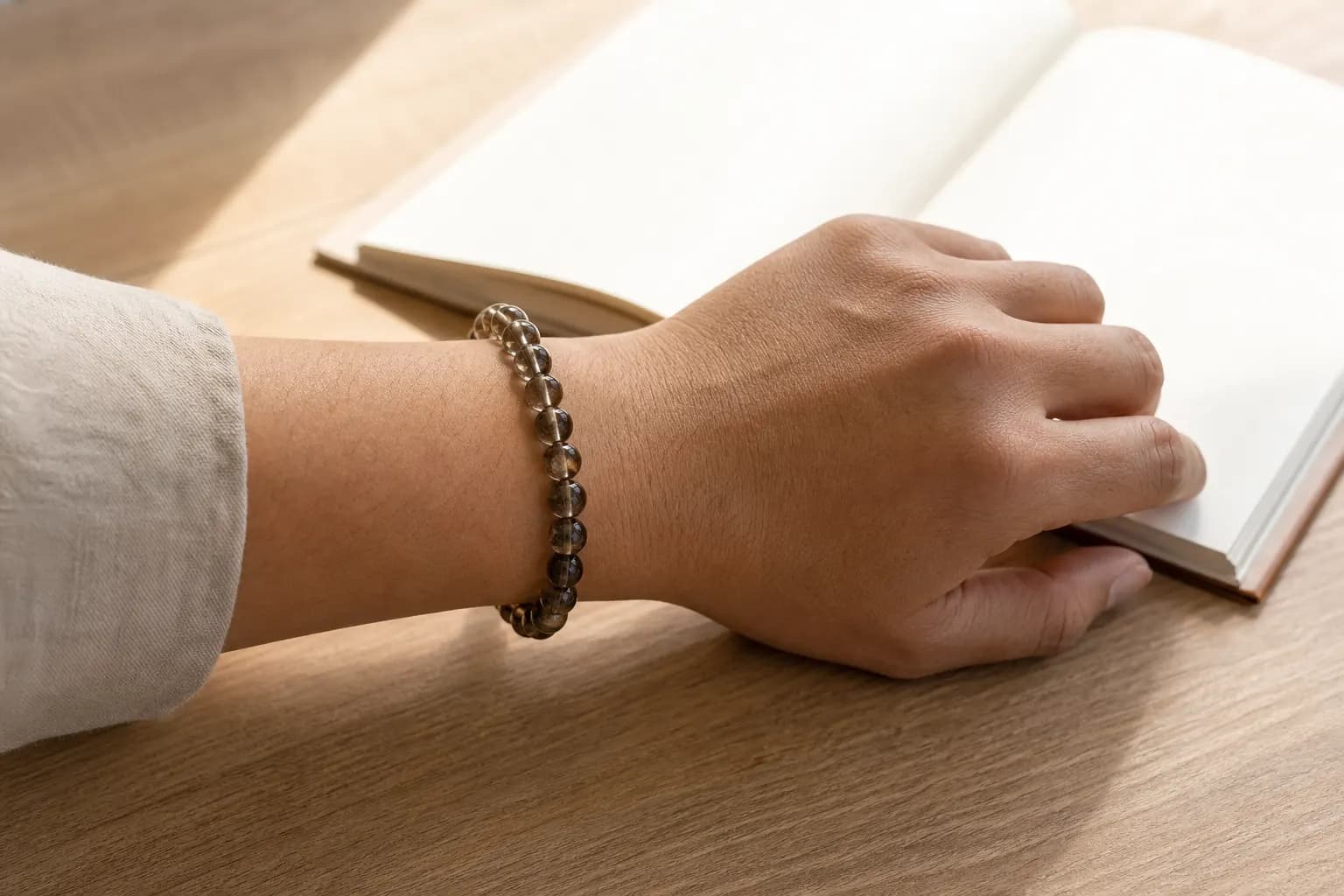
There is no universal rule for which wrist must wear smoky quartz. In many modern feng shui and crystal-wearing guides, the left wrist is described as the inward or receiving side, while the right wrist is described as the outward or releasing side. Treat that as a convention, not a law.
Choose the left wrist if the bracelet represents taking in steadiness or making space for reflection. Choose the right if it represents releasing a distraction or holding a boundary. If you write, work with tools, or wear a watch on one side, comfort and safety are better reasons to choose the other wrist.
Pick a bead size that matches daily life
Bead size changes both the look and the fit of a bracelet:
- 6 mm feels subtle, light, and easy to layer with other bracelets.
- 8 mm is the most versatile everyday scale and easy to stack.
- 10 mm makes the smoky color and internal pattern more visible.
- 12 mm creates a bolder bracelet with more wrist presence.
Larger beads take up more internal space, so two bracelets with the same outer circumference may not feel identical. Measure around the wrist bone and preview the actual bead sequence before ordering. The bracelet builder renders each bead at its real relative diameter and updates the strand size as you edit.
Pair smoky quartz with a clear design idea
Smoky quartz works well as the visual base of a bracelet. Three easy combinations are:
- Tonal and quiet: smoky quartz with black obsidian and silver obsidian.
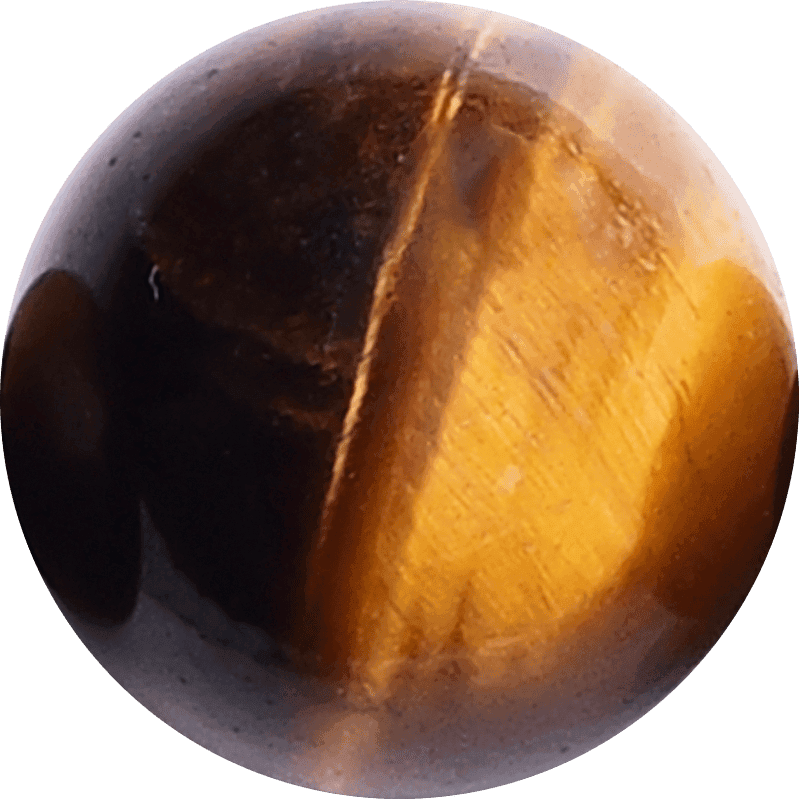
- Earthy contrast: smoky quartz with yellow tiger eye and a restrained metal spacer.
- Five-element balance: smoky quartz as Water, green prehnite as Wood, red agate as Fire, tiger eye as Earth, and shell pearl as Metal.
You do not need to include every element or every symbolic meaning. A bracelet usually looks more intentional when one stone leads, one supports it, and any accents repeat in a simple rhythm.
How can you tell if smoky quartz is real?
No single home test can prove that a smoky quartz bracelet is natural and untreated. A gemologist can examine optical properties and inclusions, while a laboratory can evaluate treatments more reliably. Still, a few shopping checks can help you avoid obvious imitations:
- Look for believable variation. Natural-stone strands often vary slightly in tone, transparency, and internal features from bead to bead. Perfect uniformity is not automatic proof of glass, but it deserves a question.
- Watch for round gas bubbles. Isolated spherical bubbles may indicate glass. Natural quartz can contain many kinds of inclusions, so do not confuse irregular veils or healed fractures with bubbles.
- Inspect the drill holes. Dye collecting in cracks or around holes can reveal color treatment in some materials.
- Ask direct questions. A trustworthy seller should say whether a product is natural quartz, synthetic quartz, glass, coated, dyed, heated, or irradiated when that information is known.
- Avoid destructive tests. Scratch tests can damage a polished bead and still give ambiguous results.
Irradiated smoky quartz is still quartz; treatment disclosure is about transparency, not whether the material suddenly becomes “fake.” GIA’s overview of gem treatments notes that irradiation is an established treatment used with several gem materials, including quartz varieties.
How to cleanse and care for a smoky quartz bracelet
Physical cleaning and symbolic cleansing are different things. For routine physical care, wipe the beads with a soft, slightly damp cloth and dry the bracelet promptly. If it needs a deeper clean, use a little mild soap and lukewarm water on the beads, but avoid soaking an elastic bracelet: water, heat, and chemicals can shorten the life of its cord or affect adhesives and metal accents.
Remove the bracelet before swimming, showering, heavy exercise, household cleaning, or applying perfume and lotion. Store it away from harder jewelry that can strike the beads. Avoid steam, ultrasonic cleaners, sudden temperature changes, and prolonged high heat; even when the quartz survives, the cord and any mixed materials may not.
If cleansing is part of your personal ritual, keep it gentle. You might leave the bracelet in soft moonlight, use sound, rest it on a clean cloth, or simply hold it while naming the intention you want to renew. Salt, smoke, and full sun are not required. A ritual should make the bracelet easier to enjoy, not put the materials at risk.
Build a smoky quartz bracelet around your intention
The best smoky quartz bracelet begins with a reason you can explain in one sentence: “I want a quiet everyday bracelet,” “I want a reminder to protect my attention,” or “I want Water tones balanced with warmer elements.” That sentence is more useful than chasing a long list of promised powers.
Start with the clear smoky quartz bead, choose 6, 8, 10, or 12 mm, then add one supporting stone at a time. Compare the color rhythm in the crystal catalog, check your element direction through the five-element reading, and arrange the final strand in the custom bracelet builder. The result should feel meaningful, comfortable, and unmistakably yours.
Material references
- Gemological Institute of America, “The Causes of Color in Minerals and Gemstones,” Gems & Gemology.
- Smithsonian National Museum of Natural History, “Tectosilicate Mineral: Smoky Quartz.”
- Gemological Institute of America, “An Introduction to Gem Treatments.”
Quick answers
Frequently asked questions
What does a smoky quartz bracelet mean?
A smoky quartz bracelet traditionally symbolizes grounding, boundaries, steadiness, and letting go. LunarBeads treats those ideas as personal intentions rather than guaranteed effects: the bracelet can be a wearable reminder to pause, protect your attention, and return to the practical next step.
Which wrist should I wear a smoky quartz bracelet on?
There is no universal rule. Modern crystal and feng shui guides often describe the left wrist as inward or receiving and the right as outward or releasing. Choose the side that matches your intention, but let comfort, work, and any watch or jewelry take priority.
Can I wear a smoky quartz bracelet every day?
Yes, quartz is durable enough for everyday jewelry, but the bracelet still needs sensible care. Remove it before swimming, showering, heavy exercise, cleaning, or applying perfume and lotion. Avoid hard impacts and prolonged heat, and check the elastic cord regularly for wear.
How do I cleanse a smoky quartz bracelet?
For physical cleaning, wipe the beads with a soft damp cloth and dry them promptly. For a symbolic ritual, try soft moonlight, sound, or simply restating your intention while holding the bracelet. Salt, smoke, full sun, and long soaking are unnecessary and may stress the cord or mixed materials.
How can I tell if a smoky quartz bracelet is real?
Look for believable variation, irregular internal veils, and clear seller disclosure, but do not rely on one home test. Round gas bubbles can suggest glass, while destructive scratch tests can damage a genuine bead. A gemologist or laboratory is the reliable route for identifying quartz and detecting treatments.
Related crystals
Stones from this story

Continue reading